Week 6 Legislative Session Recap 2026
February 17 - 20, 2026
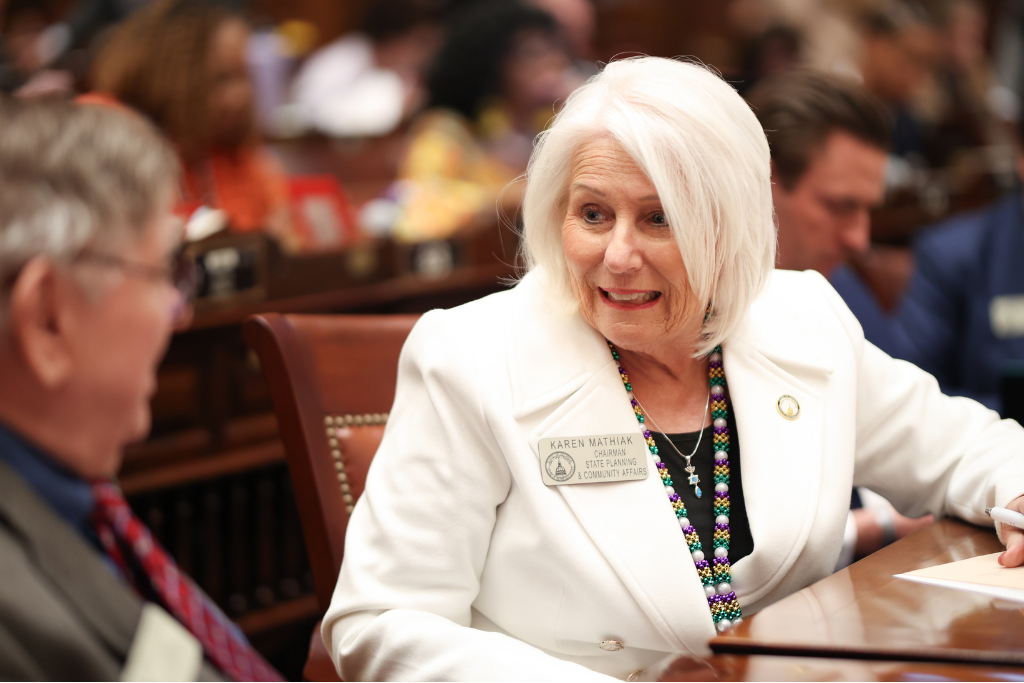
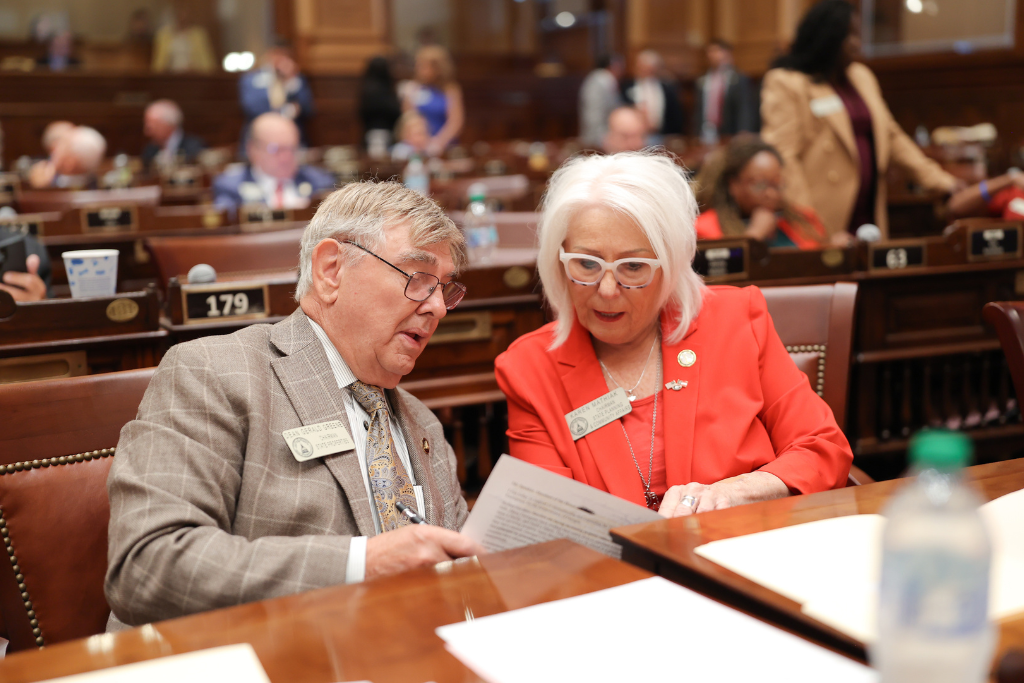
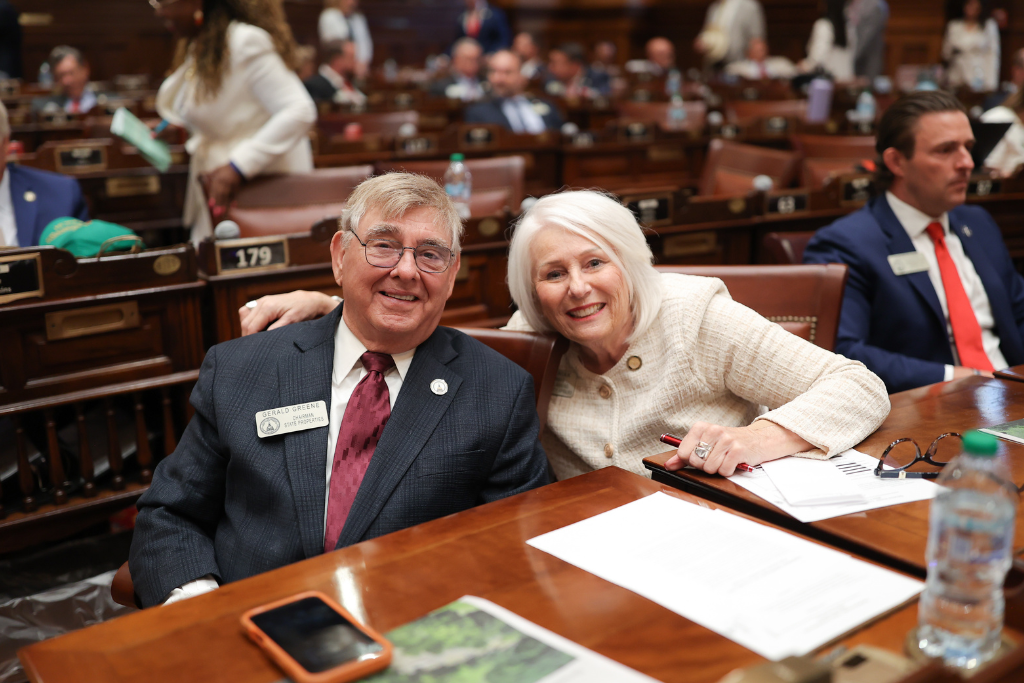
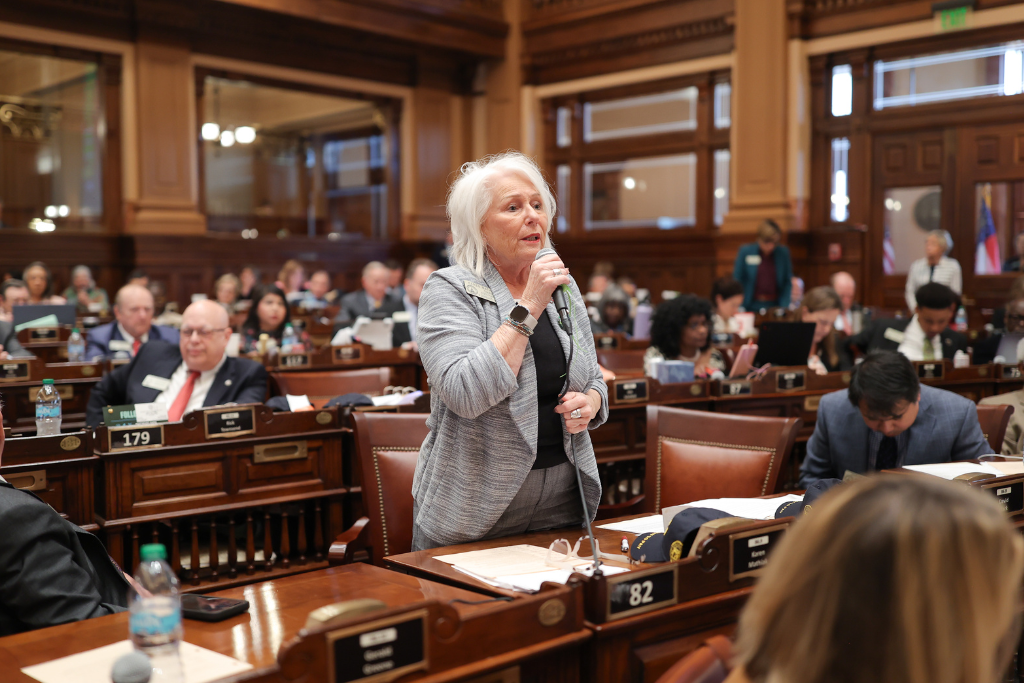
The Georgia House of Representatives returned to the State Capitol on Tuesday, February 17, 2026, resuming legislative business after the President’s Day holiday and kicking off the sixth week of session. Reaching Legislative Day 22 this week marked a significant turning point, as we have now moved beyond the halfway mark of the 2026 legislative session. With an active schedule of committee hearings and floor votes, we continued advancing key legislation aimed at protecting taxpayers, strengthening families and supporting communities across our state. As Crossover Day approaches, our work in the House Chamber will only intensify as we focus on moving priority legislation forward.
This week, the House passed the following legislation:
- House Bill 1063
- Would prohibit electric utilities from passing along construction and operational costs of large data centers (100 megawatts or more annual electricity demand) to residential or retail customers.
- Addresses unprecedented growth in energy demand from data centers across Georgia.
- Follows work by the House Special Committee on Resource Management Water Subcommittee and Energy Subcommittee, which studied the industry, toured facilities and met with community leaders.
- Would codify Georgia Public Service Commission (PSC) cost allocation rules into state law to prevent them from being weakened, reinterpreted or bypassed.
- Establishes four contract requirements for electric service to qualifying data centers:
- Minimum billing requirements to ensure facilities cover their own service costs.
- Flexible contract terms reflecting project scale.
- Performance and credit protections to safeguard ratepayers in the event of default.
- Termination provisions to protect ratepayers if a contract ends early.
- Leaves determination of incremental costs to the PSC to maintain regulatory flexibility.
- Applies only to new data center contracts; existing agreements remain unchanged.
- Establishes groundwork for responsible economic growth as the data center industry expands.
- House Bill 419
- Requires institutions within the University System of Georgia and Technical College System of Georgia to make opioid antagonists, such as naloxone, readily available.
- Permits students, visitors and university employees to possess opioid antagonists on campus or at university-sponsored activities.
- Requires institutions to maintain a supply for overdose emergencies.
- Mandates campuses with one or more Automated External Defibrillators (AEDs) to store opioid antagonists within three feet of the AED.
- Authorizes university personnel to administer an opioid antagonist in good faith during a suspected overdose.
- Grants immunity from civil liability or professional discipline to personnel who administer the medication.
- Seeks to expand access to life-saving medications and prevent opioid overdose deaths on college campuses.
- House Bill 256
- Renames the “Foster Parents Bill of Rights” to the “Foster Placements Bill of Rights.”
- Extends statutory rights to relative caregivers and fictive kin.
- Adds protections, including the right to apply a reasonable and prudent parent standard for extracurricular activities.
- Allows caregivers to request a trained, certified volunteer advocate during meetings with the Georgia Department of Human Services (DHS) when the foster child is present.
- Protects caregivers from retaliation for filing complaints with the Division of Family and Children Services (DFCS).
- Affirms the right to seek and obtain independent legal counsel regarding foster placement status.
- Supports caregivers navigating the fostering process while caring for vulnerable children.
- House Bill 943
- Directs DFCS to create a five-year pilot program for autism spectrum disorder screenings and clinical evaluations for children in foster care.
- Based on five years of research conducted by pediatric healthcare professionals specializing in autism in partnership with Georgia Southern University.
- Research indicates proper diagnosis can reduce average placements for foster children with autism from 5.5 to 2.4.
- Requires DFCS to provide training and resources for providers, directors, supervisors, case managers, staff, healthcare providers and caregivers.
- Launches in three regional service areas, expanding annually statewide.
- Prioritizes children diagnosed with ADHD or reactive attachment disorder or prescribed psychotropic medications.
- Requires plans for incremental expansion, caregiver communication strategies, adequate medical consultants and staffing support.
- Mandates annual reporting through July 1, 2031.
- Aims to provide earlier intervention and greater stability for foster children with autism.
- House Bill 970
- Expands qualified professionals who can conduct sports physicals to include licensed medical physicians, doctors of osteopathic medicine, nurse practitioners and physician assistants.
- Increases timely access to care, particularly in rural and underserved communities.
- Beginning in the 2026–2027 school year, requires cardiovascular prescreening based on guidelines from the American College of Cardiology and the American Heart Association.
- Requires use of the State Board of Education’s approved form.
- Maintains one-year validity for examinations.
- Provides parents with educational materials on warning signs and causes of sudden cardiac arrest.
- Seeks to proactively identify health risks and prevent tragedies in school sports.
- House Bill 1161
- Requires drivers to move as far as possible to the right-hand side of the roadway during traffic stops initiated by law enforcement using audible and visual signals.
- Clarifies state law following court determinations that the requirement was not explicitly outlined.
- Requires drivers to stop parallel and as close as possible to the right-hand edge or curb, clear of intersections, and remain stopped until directed otherwise.
- Permits drivers to proceed to a reasonably safe location if immediate stopping would be unsafe, using hazard lights or a turn signal.
- Extends Georgia’s existing “move over” requirements to traffic stops.
- Seeks to improve safety for motorists, emergency responders and law enforcement.
- House Bill 1061 – The “Mandi Ballinger Act”
- Creates a 12-member organizational committee chaired by the House Committee on Judiciary Juvenile and Senate Judiciary Committee chairs.
- Tasked with preparing Georgia for potential inclusion of certain 17-year-olds in the juvenile court system.
- Requires examination of best practices, national juvenile justice standards and operational, security, technological and infrastructure needs.
- Mandates consultation with law enforcement, juvenile court attorneys and youth advocates.
- Requires a detailed report by December 1, 2027, to the governor, lieutenant governor and General Assembly.
- Initiates formal planning regarding raising the juvenile court age to 18.
- Seeks a careful, fiscally responsible transition that protects public safety and supports rehabilitation.
- Additional Measures Passed:
- House Bill 541: Expands tuition equalization grant eligibility to certain nursing-focused higher education institutions meeting accreditation, physical presence and performance standards.
- House Bill 662: Amends the definition of “rural hospital organization” to include “rural freestanding emergency department.” It requires licensure for maternal and newborn services or minimum five percent annual net revenue categorized as indigent care, charity care or bad debt.
- House Bill 818: Authorizes full-time Georgia Tax Court employees to join the Judicial Retirement System (JRS).
- House Bill 956: Amends the Solid Waste Trust Fund to add a sixth allowable use and permits funds to support solid waste management programs including permitting, monitoring, regulation, inspections and enforcement.
- House Bill 964: Exempts certain 501(c)(3) entities providing fire protection services for local governments from state and local title ad valorem tax on motor vehicles and exempts sale of tangible personal property used for fire protection services from sales and use taxes.
- House Bill 987 – “Voluntary Portable Benefit Plan Act”: Allows voluntary contributions to portable benefit accounts for independent contractors.
- House Bill 1020: Requires district attorneys hired after June 30, 2026, to reach age 65 for full retirement benefits under the Judicial Retirement System.
- House Bill 1022: Prohibits operation of motor vehicles with electric tinting on windshields or windows, establishing fines up to $500 for first violation and up to $1,000 for subsequent violations.
- House Bill 1027: Authorizes counties and municipalities to enter into contracts for solar utility services, wind utility services and electric power sales for up to 20 years.
- House Bill 1086 – “Preston Fant and Brant Chesney Firefighter Safety Act”: Requires certain commercial, industrial and multiunit residential buildings to post notice of light-frame truss-type construction.
- House Bill 1096: Allows eligible county board of health employees to retain accrued annual and sick leave when transitioning to employment with the Georgia Department of Public Health.
- House Bill 1121: Revises terms of court for the Cordele Judicial Circuit to January 1 and July 1.
- House Bill 1181: Requires application for vehicle certificate of title to include last out-of-state title when inherited from a decedent owner.
- House Bill 1182: Prohibits soil amendments derived from industrial byproducts from being stored or loaded/unloaded within 100 feet of property lines or public roads.
- House Bill 1199: Provides annual Internal Revenue Code update applicable to tax years beginning January 1, 2026, for relevant federal laws passed on or before January 1, 2026.
- House Bill 1202: Corrects a scrivener’s error in state law.
As we head into our seventh week of session on Monday, February 23, we will begin with a committee workday and a full calendar of meetings as we prepare for Crossover Day. These discussions are essential to ensuring legislation is carefully reviewed and positioned for consideration by the full House. I remain committed to keeping you informed and representing your priorities under the Gold Dome. Please feel free to contact my Capitol office at karen.mathiak@house.ga.gov or (404) 656-0213. Thank you again for the opportunity to serve our community in the Georgia House of Representatives.
Updates From Karen Mathiak