Week 7 Legislative Session Recap 2026
February 23 - 27, 2026
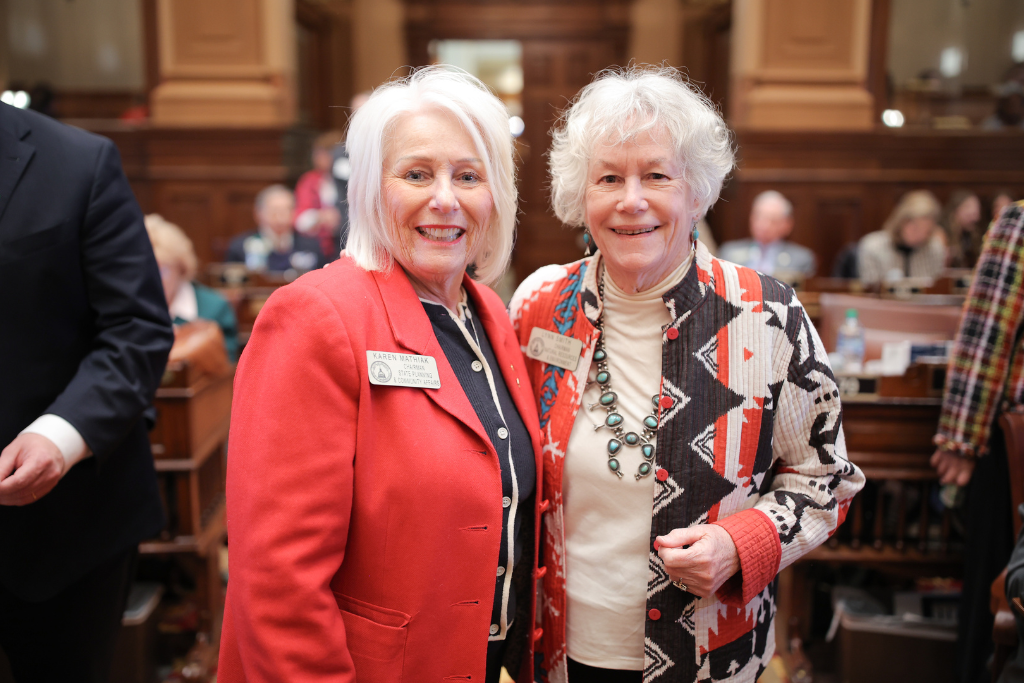
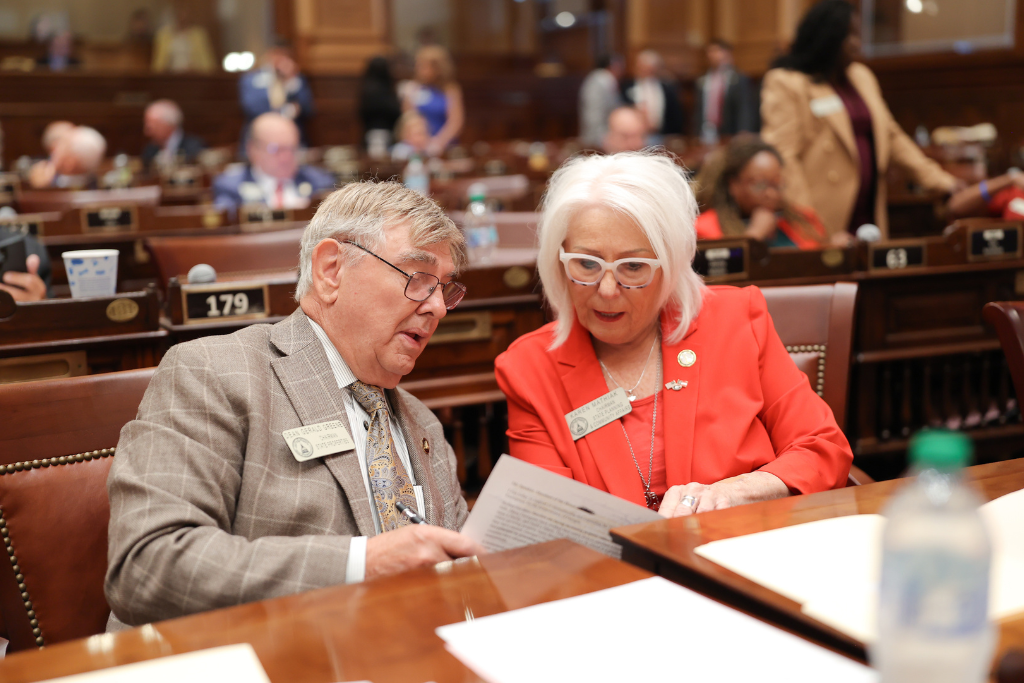
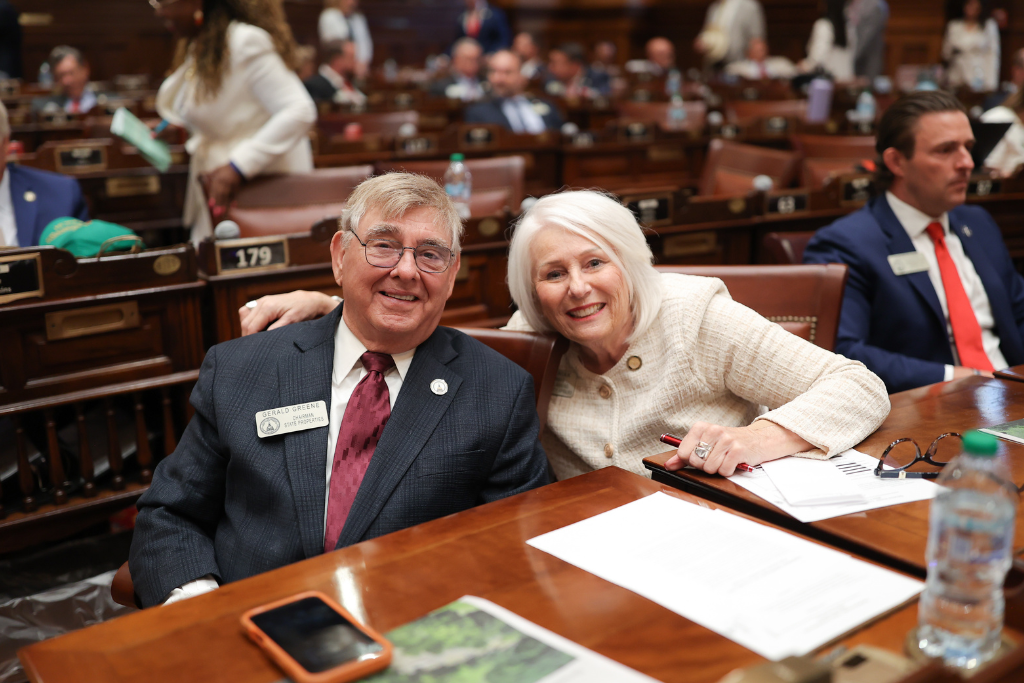
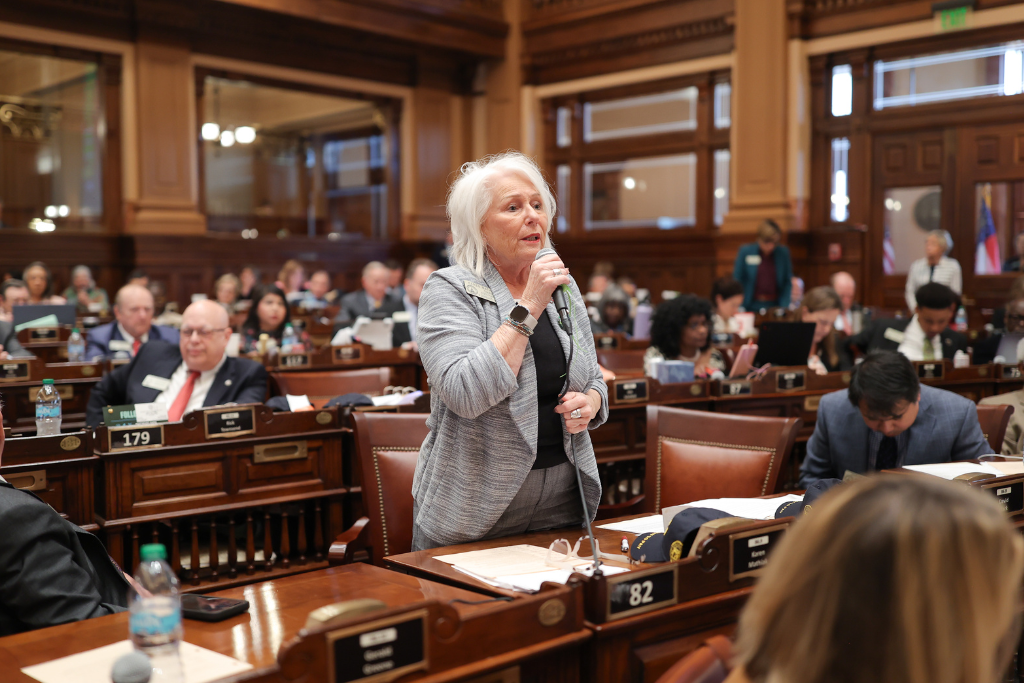
On Monday, February 23, 2026, my House colleagues and I reconvened at the State Capitol to begin the seventh week of the legislative session. We opened with our first committee workday, dedicating hours to reviewing and advancing legislation for placement on a Rules Calendar and potential consideration by the full House. These meetings play a vital role in ensuring bills are carefully examined before reaching the floor. By Friday, we had reached Legislative Day 25, with just two legislative days until Crossover Day, the deadline for legislation to pass its chamber of origin ahead of adjournment Sine Die on April 2.
The House’s most significant action this week was granting final passage to House Bill 973, the Amended Fiscal Year 2026 (AFY 2026) budget. Built on a revised revenue estimate of $43.6 billion, the budget incorporates $4.5 billion in unrestricted surplus funds and $145 million in lottery surplus funds—totaling $5.9 billion, a 15.6 percent increase over the original FY 2026 budget. The amended budget focuses on taxpayer relief, public safety, mental health, education and transportation investments.
During week seven, the House passed the following legislation:
- House Bill 973 (AFY 2026 Budget)
- Allocates $850 million for the Homeowner Tax Relief Grant program.
- Invests more than $400 million to construct a new state mental health hospital and $409 million for a new 300-bed facility at Georgia Regional Hospital in Atlanta.
- Provides $20.7 million for a 40-bed forensic restoration unit at East Central Regional Hospital in Augusta and $150 million to expand jail-based restoration services at the Cobb County Jail.
- Directs over $2 billion toward transportation projects statewide, including $250 million for local roads, $11 million for airports and $8.4 million for shortline rail improvements.
- Includes more than $600 million for a one-time $2,000 salary supplement for state employees and educators.
- Restores $325 million to the Georgia Student Finance Commission for the DREAMS scholarship program, including $25 million for next year’s awards and use of $145 million in lottery reserves toward a $300 million endowment.
- Provides $29.8 million to establish a College of Optometry at Georgia Southern University.
- Allocates $81 million to address DFCS deficits and restore foster care contracts.
- Invests $45 million in the State Housing Trust Fund, $5 million to assist homeless veterans and $100 million to strengthen the Employees’ Retirement System.
- Provides $15.75 million for the BOOST 2.0 after-school initiative.
- House Bill 1193 (Georgia Early Literacy Act of 2026)
- Funds literacy coaches in all K–3 public schools and regional literacy leaders across Georgia’s 16 RESAs.
- Provides science-of-reading-based professional learning at no cost to K–3 teachers and coaches.
- Requires full-day kindergarten and kindergarten attendance before first grade entry.
- Strengthens early-grade intervention, promotion and parent notification policies; students not meeting reading benchmarks would receive targeted support and not advance without proficiency.
- Establishes a Georgia Literacy Task Force and Director of Literacy to oversee instructional materials and screening tools.
- Requires unified literacy plans and science-of-reading-aligned instructional materials statewide.
- House Bill 1030 (Math Matters Act)
- Automatically places qualifying seventh graders on an accelerated math track beginning in 2027–2028, with parent opt-out options.
- Requires a minimum of 60 minutes of daily core math instruction for fourth and fifth graders.
- Updates teacher certification standards to emphasize strong math content knowledge and evidence-based instruction across all strands of mathematical proficiency.
- House Bill 1009
- Extends the K–8 cell phone ban to high schools by July 1, 2027.
- Prohibits student access to personal electronic devices during the school day, with exceptions for IEPs, 504 Plans and medical needs.
- Requires updated local policies, secure storage solutions and clear enforcement standards.
- House Bill 1023
- Requires weapon detection systems at primary entrances of public school buildings by July 1, 2027, with grant funding permitted.
- House Bill 1123
- Requires schools offering after-care and pre-K programs to extend after-school services to pre-K students, with a one-year waiver option for extenuating circumstances.
- House Bill 634
- Updates the Georgia Special Needs Scholarship Act to align scholarship amounts with active IEPs.
- Modernizes payment processes and enhances transparency through annual reporting.
- House Bill 310 (Student Teacher Promotion Act)
- Establishes grants to support student teachers during required classroom training.
- House Bill 385
- Allows certain students pursuing graduate or professional degrees to fully utilize their HOPE scholarship eligibility.
- House Bill 372
- Extends the sunset for retired educators returning to work through June 30, 2030, with literacy endorsement requirements for certain roles.
- House Bill 971
- Expands access to college and career academies to eligible home study and private school students when space allows.
- House Bill 689
- Creates a statewide homelessness prevention program under the State Housing Trust Fund for the Homeless Commission to fund rental assistance, eviction diversion, mediation and stabilization services.
- House Bill 1344 (Georgia Insurance Affordability and Claims Integrity Act)
- Increases fines within Georgia’s insurance code and strengthens enforcement authority.
- Establishes a felony offense for profiting from steering accident victims to generate insurance claims, with penalties of up to 10 years in prison and $200,000 in fines.
- Strengthens uninsured motorist enforcement and increases related penalties and fees.
- Requires insurers to meet clear timelines for catastrophic property claims and permits deadline extensions following declared disasters.
- Creates the Georgia Storm Damage Mitigation Program to help homeowners fortify properties.
- Formalizes excluded driver reporting requirements and establishes penalties for violations.
- Additional Measures Passed:
- House Bill 320 - Prohibits disposal of solar panels in landfills and requires delivery to recycling facilities, with civil penalties up to $20 per violation.
- House Bill 519 - Establishes a state tax credit of up to $500 per eligible employee tied to the federal Work Opportunity Tax Credit, capped at $10 million annually.
- House Bill 792 - Increases the magistrate court claims limit from $15,000 to $25,000.
- House Bill 1001 - Reduces the state income tax rate from 5.19 percent to 4.99 percent effective January 1, 2026.
- House Bill 1024 - Raises bankruptcy homestead exemptions to $50,000 for individuals and $100,000 for married couples, with inflation adjustments.
- House Bill 1070 - Increases the Class III railroad tax credit cap and extends the program’s sunset and transferability through January 1, 2032.
- House Bill 1075 - Provides enhanced sentencing of up to 10 years for individuals convicted of pimping with prior trafficking convictions.
- House Bill 1085 - Expands tax credit eligibility to forestry manufacturers in less developed counties and allows transfer of credits earned from 2026 through 2031.
- House Bill 1097 - Authorizes DBHDD and other state agencies to request national background checks in compliance with federal law.
- House Bill 1107 (Excellent Teacher Preparation Act) - Creates a statewide accountability system for educator preparation programs with annual performance metrics and reporting requirements.
- House Bill 1131 - Requires notice before warrant application hearings and ensures individuals are informed of charges.
- House Bill 1164 - Establishes a State Board of Education audit committee and expands fiscal oversight and intervention for high-risk school systems.
- House Bill 1185 - Expands the jurisdiction of the Georgia State-wide Business Court for certain internal corporate claims and sets procedures for record inspection disputes.
- House Bill 1259 - Restricts virtual instruction for out-of-system students in low-performing districts and excludes those students from equalization funding calculations.
- House Bill 1262 - Expands the Insurance and Safety Fire Commissioner’s authority to fine insurers for mental health parity and other violations.
- House Bill 1263 - Establishes procedures and a three-year filing deadline for insurers seeking refunds of improperly collected fees or taxes.
- House Bill 1274 - Requires annual financial and loss reporting from auto insurers and establishes a process to return excess profits to policyholders when identified.
- House Bill 1277 - Updates DOT policies by increasing project and property thresholds, allowing inflation adjustments, expanding transparency reporting, and lifting limits on design-build contracts.
- House Bill 1278 - Permits the Georgia Board of Dentistry to approve dental offices for administering conscious sedation.
- House Bill 1329 - Revises controlled substance classifications and authorizes pharmacists to provide certain low-dose epinephrine spray devices.
- Senate Bill 59 - Expands available tax credits for timber producers and sets timelines for application processing and awards.
On Monday, March 2, we will begin the eighth week of session with another committee workday as we approach Crossover Day on Friday, March 6. The coming days will be fast paced as we work to move legislation before the deadline. As always, I appreciate your engagement and welcome your questions or concerns. Please feel free to contact my Capitol office at karen.mathiak@house.ga.gov or (404) 656-0213. Thank you for the honor of serving as your state representative.
Updates From Karen Mathiak